Best 50 Computational Fluid Dynamics Companies – BURAQ CFD Company
This article provides an in-depth look at leading computational fluid dynamics companies, including COMSOL, that are shaping various industries worldwide. We will explore their contributions, specialties, and the advanced CFD solutions they offer, including insights from data center applications and market research.
Introduction to CFD
What is Computational Fluid Dynamics?
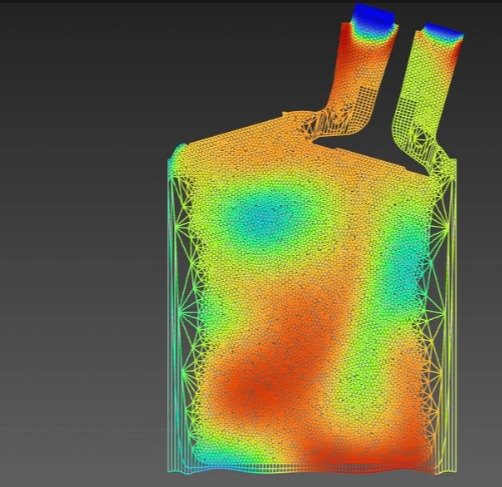
Computational Fluid Dynamics, commonly known as CFD, is a powerful branch of fluid mechanics that uses numerical methods and algorithms to solve and analyze problems involving fluid flow, including heat transfer. It leverages computers to perform the millions of calculations required to simulate the interactions of liquids and gases with surfaces subject to boundary conditions. Essentially, CFD software allows engineers to visualize and predict complex fluid behavior, which is crucial for understanding system design and performance before physical prototyping. This simulation technology forms the backbone of modern engineering analysis.
Importance of CFD in Engineering
The importance of CFD in engineering, particularly in heat transfer and structural analysis, cannot be overstated, as it provides invaluable insights into fluid flow phenomena across a myriad of applications. By employing CFD simulation, engineers can perform design optimization, predict performance, and identify potential issues early in the development cycle, thereby reducing costly physical testing and accelerating time to market. From aerospace to automotive and even life sciences, CFD solutions offer a virtual laboratory for testing and refining designs, making them an indispensable tool for R&D and advanced problem-solving.
Overview of Global CFD Companies
The global CFD market is a dynamic landscape, characterized by fierce competition and a diverse range of CFD companies offering cutting-edge software and services. These leading companies, including Altair Engineering Inc., are constantly pushing the boundaries of what is possible with simulation and advanced manufacturing. They provide advanced CFD tools, solvers, and platforms, often with multiphysics capabilities, catering to various sectors such as aerospace and defense, consumer products, and high-performance computing (HPC) for complex research projects.
| Leading CFD Companies, such as SimScale and Altair Engineering Inc., are at the forefront of innovation in this field. | Key Offerings include innovative solutions in 3D design and advanced manufacturing processes. |
|---|---|
| Ansys | Advanced CFD tools, solvers, and platforms are essential for effective visualization and analysis in engineering, particularly in structural analysis and heat transfer applications. |
| Dassault Systèmes | Advanced CFD tools, solvers, and platforms |
| Siemens | Advanced CFD tools, solvers, and platforms |
| Autodesk | Advanced CFD tools, solvers, and platforms |
Leading CFD Software Solutions
Ansys: A Leader in CFD Simulation
Ansys is a dominant force in the computational fluid dynamics industry, renowned for its comprehensive CFD software suite. Their advanced CFD solutions enable engineers to tackle intricate fluid flow problems across numerous industries, from aerospace to automotive, leveraging the latest technology from leading software companies. Ansys’s simulation tools are integral to design optimization and in-depth analysis, providing users with robust multiphysics capabilities and powerful solvers essential for cutting-edge research projects and product development.
Dassault Systèmes and Its CFD Offerings
Dassault Systèmes, a key player in the computational fluid dynamics market, integrates its robust CFD software portfolio with its 3DExperience platform as part of its broader CAE and CAD solutions. Their simulation platforms are widely adopted in the aerospace and defense sector, as well as for consumer products and life sciences. Dassault Systèmes’ commitment to innovation ensures its CFD solutions provide advanced CFD capabilities, supporting engineers in critical fluid flow analysis and system design.
Autodesk: Innovative Simulation Software
Autodesk, a familiar name in design and engineering, also offers innovative CFD software that empowers engineers with powerful simulation tools. Their computational fluid dynamics offerings are geared towards facilitating design optimization and performance prediction across various applications, including automotive and architecture. Autodesk’s cloud-based CFD solutions are particularly noted for their accessibility and for integrating fluid-flow analytics into seamless workflows, thereby enhancing collaborative research projects and R&D efforts.
Top CFD Companies by Region
North America: Pioneers in CFD Technology
North America is a hotbed for pioneering computational fluid dynamics companies, with many leading the charge in advanced CFD software development. Companies like Ansys, Autodesk, and Flow Science are technology companies headquartered here that drive innovation in simulation tools and high-performance computing (HPC) for complex fluid-flow problems. This region’s vibrant ecosystem supports extensive R&D, contributing significantly to the global CFD market and shaping the future of engineering analytics for aerospace and other sectors.
Europe: Notable CFD Firms
Europe boasts a strong presence of notable computational fluid dynamics companies, including giants like Siemens and Dassault Systèmes, as well as specialists such as CD-adapco, now part of Siemens, and Altair Engineering Inc. These firms are at the forefront of developing sophisticated CFD software and simulation tools that cater to diverse industries, including automotive, energy, and life sciences. Their contributions to multiphysics and advanced CFD solutions are vital for research projects and enhancing design optimization across the continent.
Asia-Pacific: Emerging CFD Companies
The Asia-Pacific region is rapidly emerging as a significant hub for software companies in computational fluid dynamics, with a growing number of firms contributing to the global CFD market. These companies are increasingly investing in CFD software development, offering tailored simulation tools and CFD consulting services. Their focus on high-performance computing and data analytics for fluid-flow problems is driving innovation in the aerospace, consumer products, and automotive sectors, supporting regional R&D and advanced CFD applications.
CFD Consulting Services
What to Expect from CFD Consulting
Engaging with CFD consulting services offers invaluable expertise for companies seeking to leverage advanced computational fluid dynamics without the overhead of in-house specialists. Clients can expect comprehensive support, from initial project scoping and problem definition to the selection and application of appropriate CFD software and solvers, including those from Software Cradle. Consultants, often experienced CFD engineers, provide detailed fluid flow analysis, design optimization, and data analytics, ensuring that simulation results are accurately interpreted and integrated into the system design process, ultimately saving time and resources on complex research projects.
Case Studies of Successful CFD Consulting
Successful CFD consulting is best illustrated by case studies that demonstrate tangible benefits across industries and are supported by market research. These projects underscore how specialized CFD company expertise, coupled with advanced CFD software and modeling capabilities, can deliver critical insights for design optimization and R&D.
| Industry | Benefits of CFD Consulting |
|---|---|
| Aerospace | Optimized wing designs that significantly reduce drag and improve fuel efficiency through meticulous fluid-flow simulation are increasingly supported by advanced manufacturing techniques and CFD analysis. |
| Automotive | Refined vehicle aerodynamics and cooling systems, enhancing performance and passenger comfort. |
Choosing the Right CFD Company for Your Needs
Selecting the right CFD company for consulting services involves considering several key factors to ensure a successful partnership. Companies should evaluate a prospective firm based on its track record, industry-specific experience, and proficiency with leading CFD software. It is crucial to assess their ability to provide tailored CFD solutions, robust data analytics, and effective communication throughout the fluid flow simulation process, aligning with your specific project requirements and budget to achieve optimal design optimization.
Key factors to consider include:
| Evaluation Criteria | Details to Assess |
| Software Proficiency in advanced manufacturing and engineering services is essential for leveraging the full potential of CFD tools. | Ansys, Dassault Systèmes, and Altair Engineering Inc. are leading names in the CFD market, offering comprehensive solutions. |
| Service Capabilities | Tailored CFD solutions, strong data analytics, and effective communication |
Future Trends in Computational Fluid Dynamics
Advancements in CFD Simulation Techniques
The future of computational fluid dynamics is marked by exciting advancements in CFD simulation techniques, pushing the boundaries of what is possible with fluid flow analysis and visualization. Expect to see continued improvements in solver algorithms, leading to faster and more accurate simulations, especially for complex multiphysics problems, as companies like Hexagon AB enhance their offerings. Enhanced modeling capabilities, including more sophisticated turbulence models and meshing strategies, will further refine the precision of CFD software, making it an even more indispensable tool for design optimization and R&D across all computational fluid dynamics companies.
The Role of Analytics in CFD
Data analytics is playing an increasingly pivotal role in the evolution of computational fluid dynamics, particularly in heat transfer analysis, transforming the way CFD engineers interpret and use simulation results. Advanced analytics tools, often integrated into CFD software, enable deeper insights into fluid-flow phenomena, helping identify subtle patterns and optimize system design more effectively. This synergy between CFD and data analytics is crucial for predictive modeling, enhancing the efficiency of research projects, and informing strategic decisions in sectors such as aerospace and consumer products, thereby driving innovation among leading companies.
Integration of CFD with Other Technologies
The integration of computational fluid dynamics with other cutting-edge technologies is a significant future trend, promising to unlock new levels of innovation and reduce time-to-market. We can anticipate deeper integration of CFD software with CAD and CAE platforms, such as PTC and Cadence, creating more seamless design and analysis workflows. Furthermore, the convergence of CFD simulation with artificial intelligence, machine learning, and high-performance computing (HPC) will enable more robust multiphysics simulations and cloud-based CFD solutions, accelerating design optimization and fostering groundbreaking research projects for computational fluid dynamics companies worldwide.